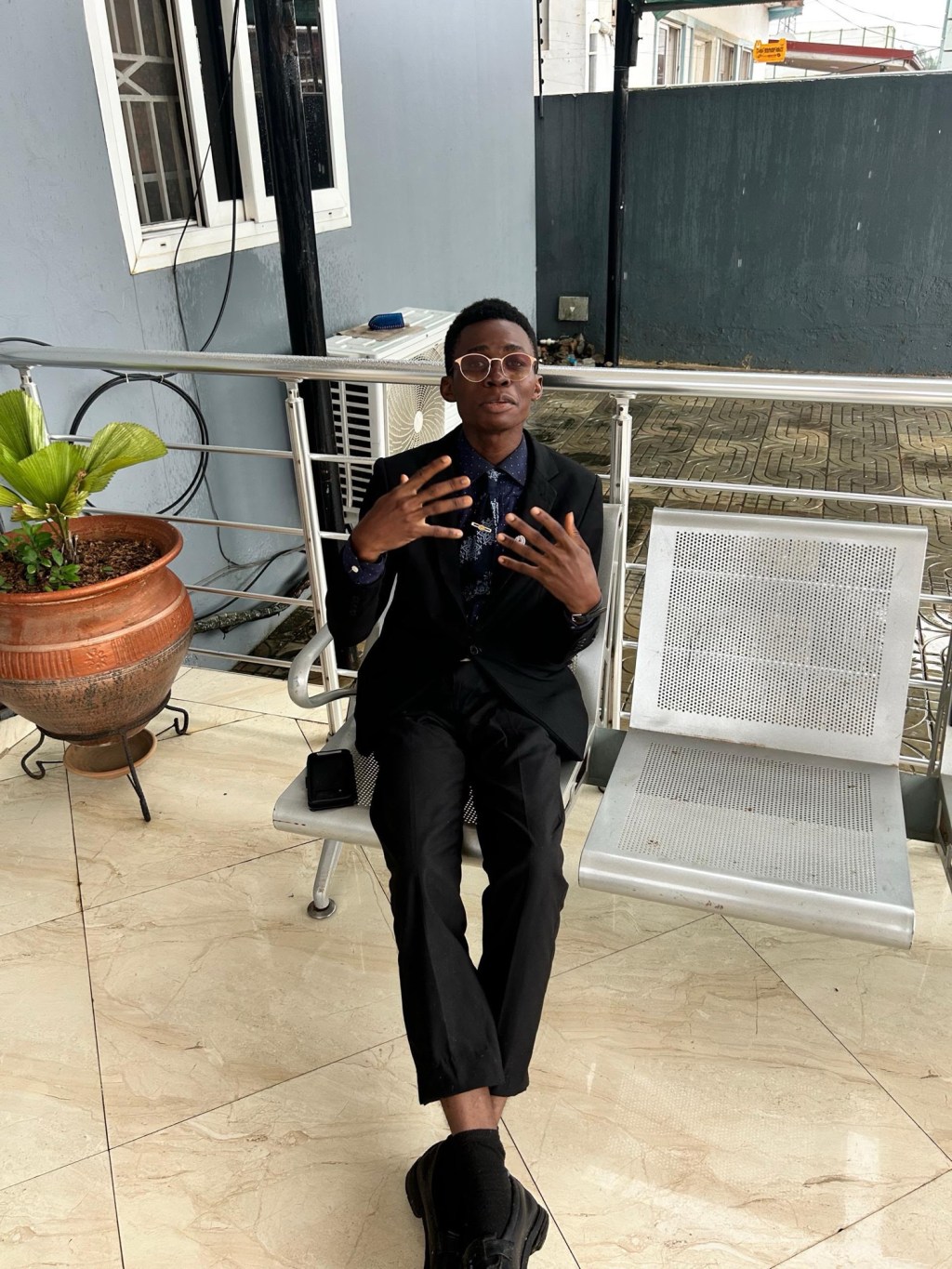
Unleashing the Power of the African Mind
By Raphael Aye-Gboyin, Founder of TextAfrique

Technology is changing the world at an unprecedented pace. Artificial Intelligence (AI), in particular, is transforming how people learn, communicate, work, conduct research and solve problems. Yet, as I observe this remarkable transformation, one question continues to occupy my mind: What happens to the millions of people who cannot fully participate in this technological revolution?
This question is one of the biggest reasons I am building TextAfrique.
My motivation goes beyond creating another technology company. It comes from a desire to address a problem that I believe deserves greater attention: the unequal accessibility of artificial intelligence, particularly across Africa.
null
The reality that inspired me
Across many African communities, access to reliable internet connectivity remains a challenge. For some people, purchasing data is expensive. For others, the devices, infrastructure and digital resources required to use modern AI applications are simply unavailable.
There is also the language challenge. Many artificial intelligence systems are developed and optimised around dominant global languages, leaving several African languages underrepresented.

I began to reflect on the implications of this situation.
If artificial intelligence is becoming an important part of the world’s future, should access to it depend on where someone lives, the language they speak or how much internet data they can afford?
I believe the answer should be no.

A child in a rural Ghanaian community should have opportunities to benefit from AI just as a student in a technologically advanced city does. A farmer should be able to access useful information in a familiar language. An entrepreneur should not be excluded from intelligent digital tools simply because of connectivity limitations.
null
These realities strengthened my determination to explore a different approach.
Why offline AI matters to me
One of the central ideas behind TextAfrique is exploring artificial intelligence that can operate beyond the limitations of continuous internet connectivity.
null
I believe offline-capable AI has the potential to change how underserved communities interact with technology.

Through local AI processing, model optimisation and hybrid connectivity approaches, we can explore ways to bring intelligent capabilities closer to users.
This is particularly important for communities where internet access is unreliable or expensive.
My interest is not simply in making AI available. It is in making AI practical, accessible and relevant to the environments in which people actually live.
Building AI around African realities
Another important motivation behind TextAfrique is the need for greater African representation in artificial intelligence.
Africa is home to thousands of languages, diverse cultures and unique social and economic realities. These differences should be reflected in the technologies designed to serve its people.

I envision a future where users can interact with AI in languages such as Twi, Hausa, Ewe, Ga and Fante.
I want to contribute to an AI ecosystem where African languages are not treated as secondary considerations but as essential components of technological development.
For me, this is not only about language translation. It is about inclusion, representation, cultural relevance and equal opportunities to participate in the digital economy.
null
More than a business idea
Building TextAfrique is also a personal commitment to innovation.
I understand that developing an ambitious technology platform comes with challenges. There are limitations involving funding, computing resources, infrastructure, research and technical development.
However, I do not believe that the existence of these challenges should prevent us from exploring solutions.
I am approaching TextAfrique as a long-term technological undertaking, one that requires research, experimentation, collaboration and continuous improvement.
I want to build something that responds to a genuine need rather than simply following global technology trends.

I also believe that African innovators must move beyond being consumers of technology and increasingly become creators, researchers and contributors to its development.

null
The future I want to help create
My vision for TextAfrique is to contribute to a future where artificial intelligence is not reserved for people with expensive devices, reliable internet connections or proficiency in a handful of international languages.
I want to see students accessing educational assistance, farmers obtaining useful agricultural information, entrepreneurs exploring new opportunities and underserved communities participating more actively in the digital economy.

These are ambitions that will require significant work, partnerships and technological advancement. But they represent the direction in which I want TextAfrique to grow.
Ultimately, I want the company to demonstrate that African technological innovation can be designed around local challenges while contributing to global conversations.
A personal commitment
I started thinking about TextAfrique because I could not ignore the gap between the promises of artificial intelligence and the realities experienced by many people across Africa.
I see an opportunity to contribute to closing that gap.
I may not have all the resources required to achieve this vision today, but I believe meaningful innovation begins with identifying a problem, asking difficult questions and having the courage to work towards a solution.
TextAfrique represents that commitment.
I am building it because I believe access to intelligence, knowledge and technological opportunity should not be determined by geography, connectivity or language.

Africa should not simply inherit the future of artificial intelligence. We should have the opportunity to build it.
That is my motivation. That is the purpose behind TextAfrique.
Raphael Aye-Gboyin
Founder, TextAfrique
TextAfrique – AI for African Realities.


Leave a Reply