
Examining the Connectivity Crisis, Technological Opportunities, and Future of Accessible AI in Africa.
Introduction
As artificial intelligence (AI) continues to transform global economies, a critical question emerges: Can Africa fully participate in the AI revolution when millions of its citizens remain disconnected from the internet?
An investigation by TextAfrique into existing research and technological developments reveals a significant gap between the advancement of artificial intelligence and the infrastructure required to access it.
According to the International Telecommunication Union (ITU, 2025), approximately 2.2 billion people worldwide remained offline in 2025, despite global internet adoption reaching 74%.
Africa faces particularly significant challenges. ITU data indicate that only 36% of Africa’s population used the internet in 2025, compared with 92% in Europe (ITU, 2025).
These findings raise concerns about the accessibility of internet-dependent AI technologies across the continent.

1. Investigation Findings: Africa’s Connectivity Crisis
The investigation identified internet accessibility as a major obstacle to inclusive AI adoption.
According to the GSMA (2025), Africa recorded approximately 416 million mobile internet users in 2024, representing a mobile internet penetration rate of approximately 28%.
More significantly, approximately 960 million Africans lived within mobile internet coverage areas but did not use mobile internet services.
This demonstrates that network availability alone does not guarantee digital participation.
The GSMA (2025) identifies affordability, digital literacy, and access to suitable devices among the barriers preventing people from using available mobile internet services.
Furthermore, ITU (2025) estimates that internet usage in Africa reached only 21% in rural areas, compared with 55% in urban communities.
These statistics reveal a substantial urban–rural digital divide.
For AI developers, the implication is significant: technologies designed exclusively for continuous internet connectivity may remain inaccessible to large sections of Africa’s population.

2. Can Artificial Intelligence Operate Without Internet?
Technical developments suggest that certain AI capabilities can operate independently of continuous internet connectivity.
Offline AI generally involves deploying models directly onto local devices or computing infrastructure rather than relying entirely on remote cloud servers.
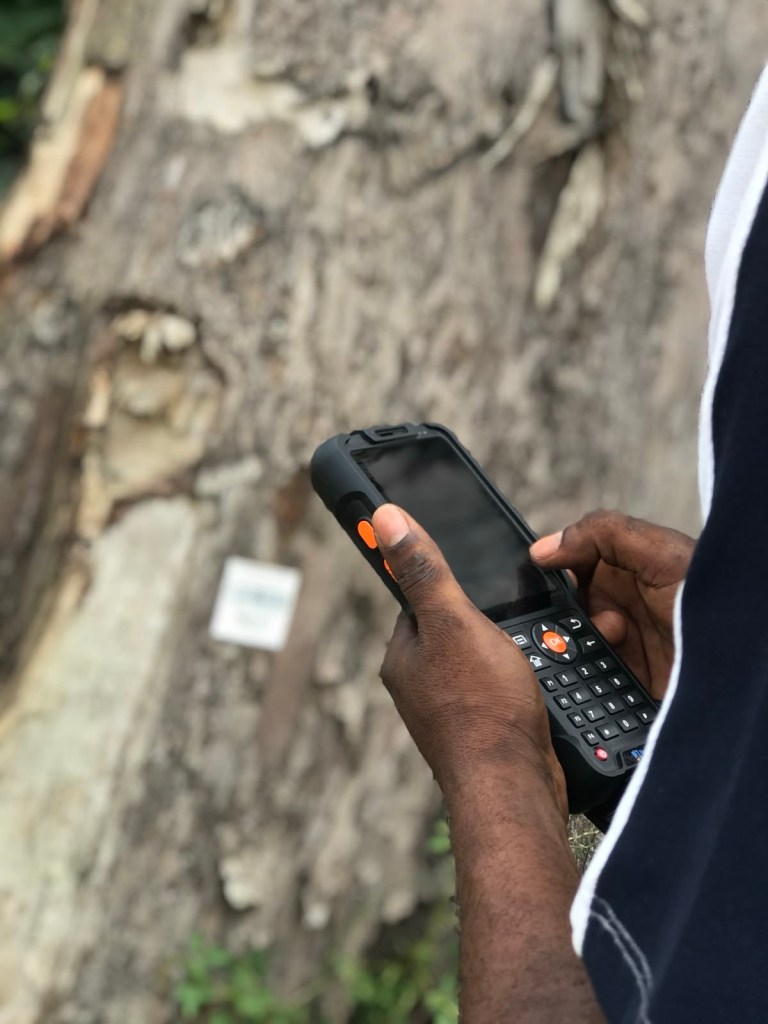
Through technologies such as edge computing, model compression, and small language models, selected AI tasks can be performed locally.
Potential applications include:
- Offline educational assistance.
- Agricultural information systems.
- Local-language translation.
- Document processing.
- Small-business productivity tools.
However, offline AI faces technical limitations, including restricted processing capacity, storage requirements, energy consumption, and difficulties maintaining up-to-date information.
Consequently, offline AI should not be presented as a complete replacement for cloud-based systems.
Instead, hybrid AI infrastructure, combining local processing with optional internet connectivity, represents a promising direction for further investigation.

3. The African Language Challenge
Beyond connectivity, the investigation identified language accessibility as another important barrier.
UNESCO (2026) reports that AI systems trained predominantly on widely represented languages often perform less effectively when processing African languages.
In its examination of African-language AI accessibility, UNESCO highlights research reporting that ChatGPT recognized only approximately 20% of written Hausa sentences in a particular evaluation.
The finding illustrates the difficulties associated with limited language-specific training data and evaluation.
For African communities, language inclusion is essential to ensuring that AI technologies are useful within local educational, agricultural, and business environments.
TextAfrique considers African-language integration a central component of its proposed offline-first AI infrastructure.

4. TextAfrique’s Research Direction
In response to these challenges, TextAfrique is exploring an artificial intelligence framework designed around African infrastructure and accessibility requirements.
The initiative’s research priorities include:
Offline-first AI: Investigating locally deployable models that can provide selected services without continuous internet access.
Multilingual accessibility: Exploring support for African languages, beginning with Twi and potentially expanding to Hausa, Ewe, Ga, and other languages.
Hybrid infrastructure: Examining how offline functionality could be combined with cloud-based services when internet connectivity becomes available.
Affordable access: Investigating lightweight AI applications and alternative community-based computing infrastructure.
Privacy-conscious processing: Exploring approaches that reduce unnecessary transmission of user information to external servers.
These priorities reflect TextAfrique’s proposed technological direction and require further development, testing, and validation.

5. Economic and Social Implications
The investigation suggests that accessible offline AI could contribute to digital inclusion across several sectors.
In agriculture, locally deployed AI systems could support farmers with educational resources and selected decision-support functions.
In education, offline learning assistants could expand access to digital learning materials in communities experiencing unreliable connectivity.
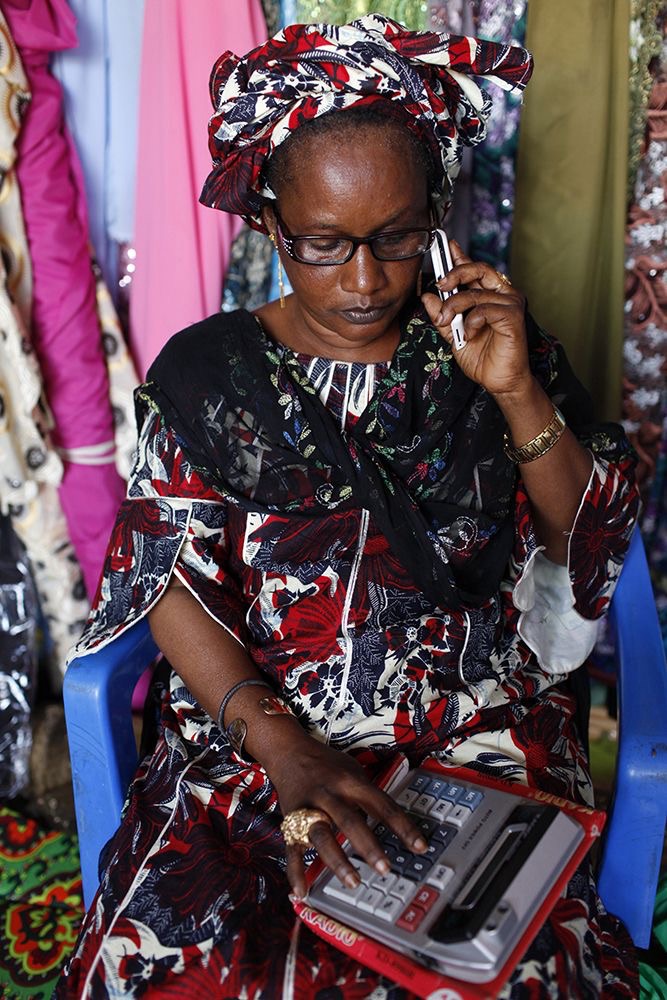
For small businesses, lightweight AI tools could assist with administrative tasks, content preparation, and productivity.
The economic significance of digital connectivity is already substantial.
According to the GSMA (2025), mobile technologies and services contributed approximately US$220 billion to Africa’s economy in 2024, equivalent to 7.7% of the continent’s GDP.
The organization projects that this contribution could reach US$270 billion by 2030.
Although these figures describe the broader mobile economy rather than the economic impact of offline AI specifically, they demonstrate the importance of digital technologies to Africa’s development.
6. Conclusion: The Case for Offline AI
The evidence examined in this investigation indicates that Africa’s AI accessibility challenge extends beyond technological innovation.
Internet affordability, infrastructure limitations, device accessibility, and linguistic exclusion continue to influence who can benefit from emerging intelligent systems.
Offline AI offers a potentially important response, particularly when combined with appropriate hardware, locally relevant information, and responsible technological development.
However, its effectiveness must be established through practical testing, affordability assessments, and evaluations involving intended users.
For TextAfrique, the findings reinforce the importance of investigating artificial intelligence systems designed for communities where continuous internet connectivity cannot be assumed.
Africa’s AI future must be measured not only by technological advancement but also by how widely its benefits can be accessed.
TEXTAFRIQUE
Africa first .Offline AI
References
GSMA. (2025). The mobile economy Africa 2025. GSMA.
International Telecommunication Union. (2025). Measuring digital development: Facts and Figures 2025. ITU.
International Telecommunication Union. (2026). Internet use: Facts and Figures 2025 regional statistics. ITU.
Access the ITU statistical presentation
Maisiri, J. (2026, April 2). African languages, the blind spot of AI. UNESCO.
GSMA. (2025). The state of mobile internet connectivity 2025: Overview report. GSMA.
Access the connectivity report
excerpt:
TextAfrique investigates Africa’s growing AI accessibility challenge, revealing that only 36% of Africans used the internet in 2025. Drawing on findings from ITU, GSMA, and UNESCO, the report examines how offline artificial intelligence could address connectivity barriers, support African languages, and expand technological opportunities across underserved communities.
Suggested tags:
#textafrique #offlineai #africanai #digitalinclusion #artificialintelligence #africaninnovation


Leave a Reply