Artificial intelligence is transforming how people learn, work, communicate, and access information. But as AI continues to expand globally, one important question remains: Does everyone have equal access to it?

For millions of people across Africa, the answer is still no.
Language, internet connectivity, digital infrastructure, and access to advanced technologies can create barriers between people and the benefits of artificial intelligence. TextAfrique is being built to help close that gap.
AI Designed With Africa in Mind
TextAfrique is an offline AI platform focused on making artificial intelligence more accessible through African languages and environments where reliable internet access cannot always be guaranteed.
Rather than assuming that everyone has constant access to high-speed connectivity, TextAfrique explores a different approach: bringing useful AI capabilities closer to the user.
This means AI can become more practical for communities, students, businesses, professionals, and individuals who may not always have the infrastructure required by conventional online AI platforms.

Breaking the Language Barrier
Africa is home to thousands of languages and diverse cultural communities. Yet much of the world’s digital technology continues to prioritize a relatively small number of global languages.
Language should not determine who gets to participate in the AI economy.
TextAfrique is focused on creating technology that recognizes the importance of African languages and the people who speak them.
By supporting African-language interaction, TextAfrique aims to contribute to a more inclusive digital environment where people can engage with AI in ways that feel natural, familiar, and relevant to their communities.
Why Offline AI Matters
Internet connectivity has improved significantly across Africa, but reliable and affordable access is still not universal.
There are situations where a person may have a smartphone or computer but limited connectivity. There are rural communities where internet access can be inconsistent. There are educational environments where connectivity is expensive or unavailable.
Offline AI creates another possibility.
Instead of making connectivity a requirement for every interaction, AI capabilities can be designed to operate closer to the user.
This can open opportunities for:
- Education and learning
- Local-language communication
- Research and information access
- Small-business productivity
- Community development
- Digital inclusion
- Local innovation
From Technology to Digital Inclusion
TextAfrique is not simply about building another AI tool.
It represents a broader idea: African communities should not only consume the future of technology—they should participate in building it.
The future of AI will be shaped by the languages, data, creativity, problems, and experiences represented in the technology.
That makes African-language AI particularly important.
When technology understands local contexts, it can move beyond simply translating information and begin addressing real problems experienced by the people who use it.
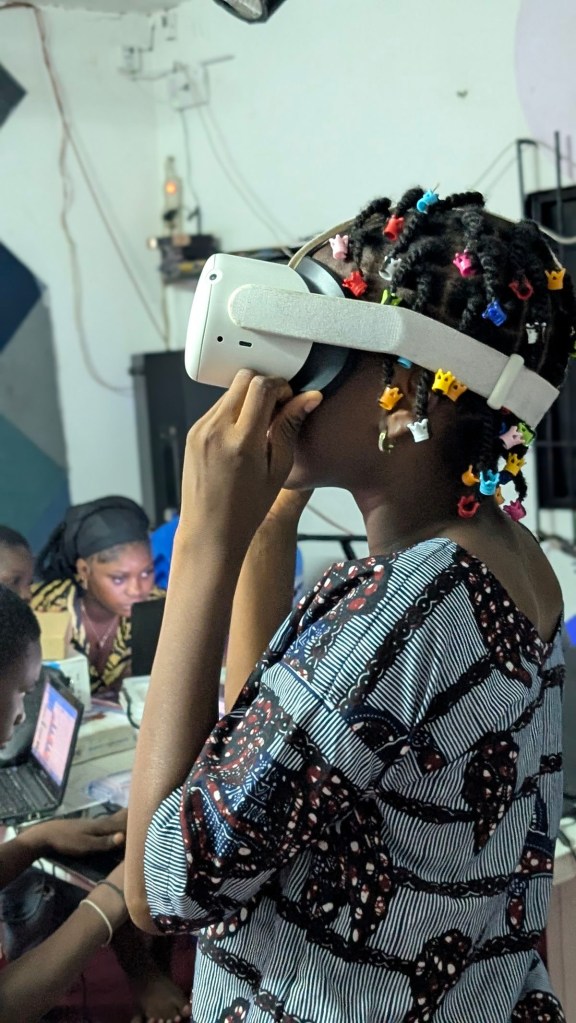
Building Beyond Connectivity
The next generation of African technology will not necessarily be defined by how closely it imitates technology built elsewhere.
It can be defined by how effectively it solves African problems.
TextAfrique is exploring that opportunity through offline AI and African-language technology.
The goal is simple but ambitious: make AI more accessible, more inclusive, and more relevant to Africa.
As artificial intelligence becomes increasingly embedded in everyday life, Africa deserves AI systems that understand its people, languages, environments, and realities.
TextAfrique is building toward that future.
The Future Should Speak Our Languages
AI should not feel distant.
It should not be limited by language.
And access to intelligent technology should not depend entirely on being connected to the internet.
TextAfrique is working toward a future where AI can be closer to the people who need it—offline, accessible, and designed with Africa in mind.
TextAfrique — Intelligence that speaks our languages.



Leave a Reply